


The artist has donated the complete sum of his £25k Mercury Prize prize money to the MVT, which works to protect the United Kingdom's grassroots live music spots.
Fender was presented with the cheque on 16 October as his third album the album was declared the best record of the last 12 months.
The musician has decided to donate the funds to the MVT, in appreciation of the vital role local spots played in his early career.
"I couldn't be pursuing what I am doing today if it weren't for all the performances I played around the region, and further afield, when I was just getting going," stated Sam Fender. "These spaces are renowned, but they are facing challenges."
Beginning in 2023, over 150 of these spaces have shut down – roughly one-sixth of the whole industry in the UK.
Recently, well-known musicians like Pulp, the group Coldplay, Katy Perry and Ed Sheeran have all backed the trust in its efforts to keep the scene afloat, by adding a small levy to their admission fees, which benefits independent venues.
Fender also took part, raising over £100k on his recent tour to help numerous local spots across England, Scotland, and Wales.
The money helped locations that were facing possible closure due to challenges stemming from floods, fire incidents and bereavements, as well as licensing issues, legal disputes and noise complaints.
Some locations obtained monetary aid in improving facilities and sound and lighting systems that positively impacted artists and concertgoers.
"The concept that money from concerts in big venues supports the local stages, where it all starts for musicians like me, is just common sense," the star has stated.
The musician is far from the only musician to donate his Mercury Prize funds to worthy causes.
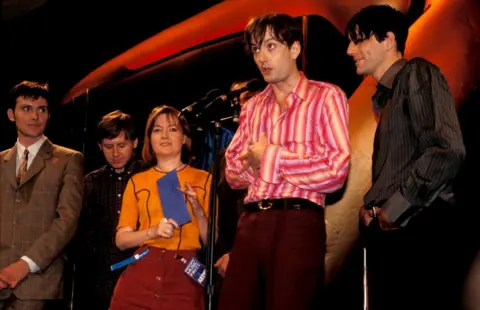
When Pulp won the trophy in the mid-90s for their album the album, frontman Cocker declared that the group would contribute their prize money to the charity War Child.
That year, artist she divided her prize across several good causes, like the NSPCC and a charity for Sickle Cell.
"I also gave a thousand pounds to Highgate Newtown, to their classes, because I trained in gymnastics when I was growing up and they lacked new equipment," Ms Dynamite told a publication.
In recent years, the band gave their prize money to the youth organization that developed their group, alongside other independent music bodies.
Additionally 1994 winners the group contributed their award to a MS organization after a friend was diagnosed the disease.
"Winning was quite enough," said singer Heather Small. "The prize was the bonus but we didn't require the extra, because we had the honor. So our success impacted the lives of others."
Last week, the trust announced it had protected two small stages in that region, by transferring them to local control.
The Joiners in the city and the second in the city were bought under the public acquisition initiative, which is backed by Arts Council England and enthusiasts who buy "stakes" in the properties.

